Culture
Stupas and Temples near Budhanilkantha: A Spiritual Journey in Kathmandu
From the reclining Vishnu at Budhanilkantha to the great stupas of Boudhanath and Swayambhunath — the sacred sites within reach of the homestay, and how to visit them respectfully.
By Shiva GiriPublished Updated 6 min read
Kathmandu is often called a living spiritual city. Hindu temples and Buddhist stupas stand side by side, prayer flags snap in the wind, and worship is part of everyday life rather than something kept for holidays. Budhanilkantha, on the valley's quiet northern edge, is a peaceful base for exploring it.
Stupas and temples: what's the difference?
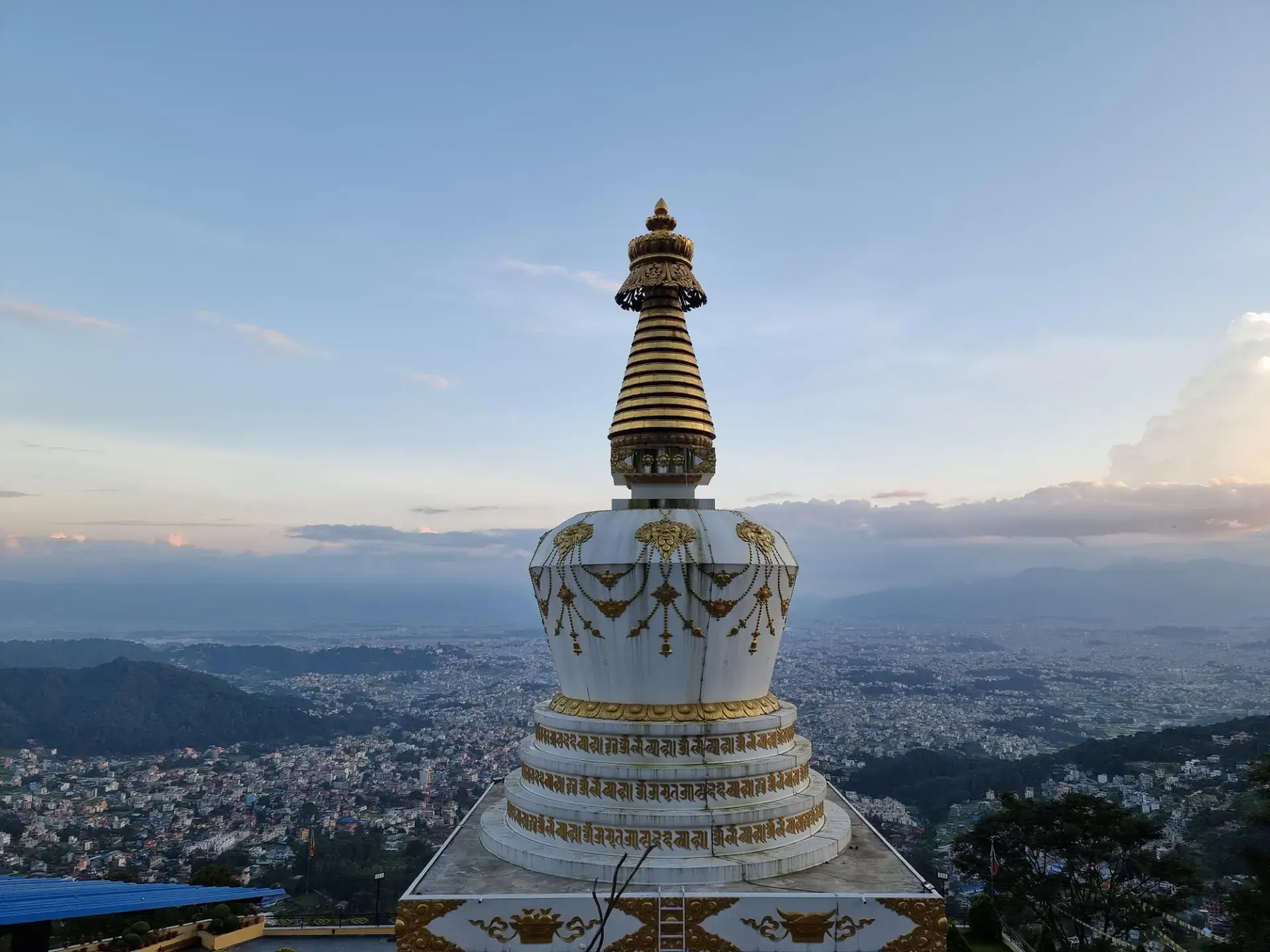
A stupa is a Buddhist monument — a dome, often holding relics, topped by a spire with the watchful eyes of the Buddha. Pilgrims walk around stupas clockwise, spinning prayer wheels as they go. A temple (mandir) is usually Hindu, a shrine to deities such as Vishnu, Shiva or Krishna. In Nepal the two traditions overlap: many Hindus visit stupas and many Buddhists visit temples.
Budhanilkantha Temple — the Sleeping Vishnu
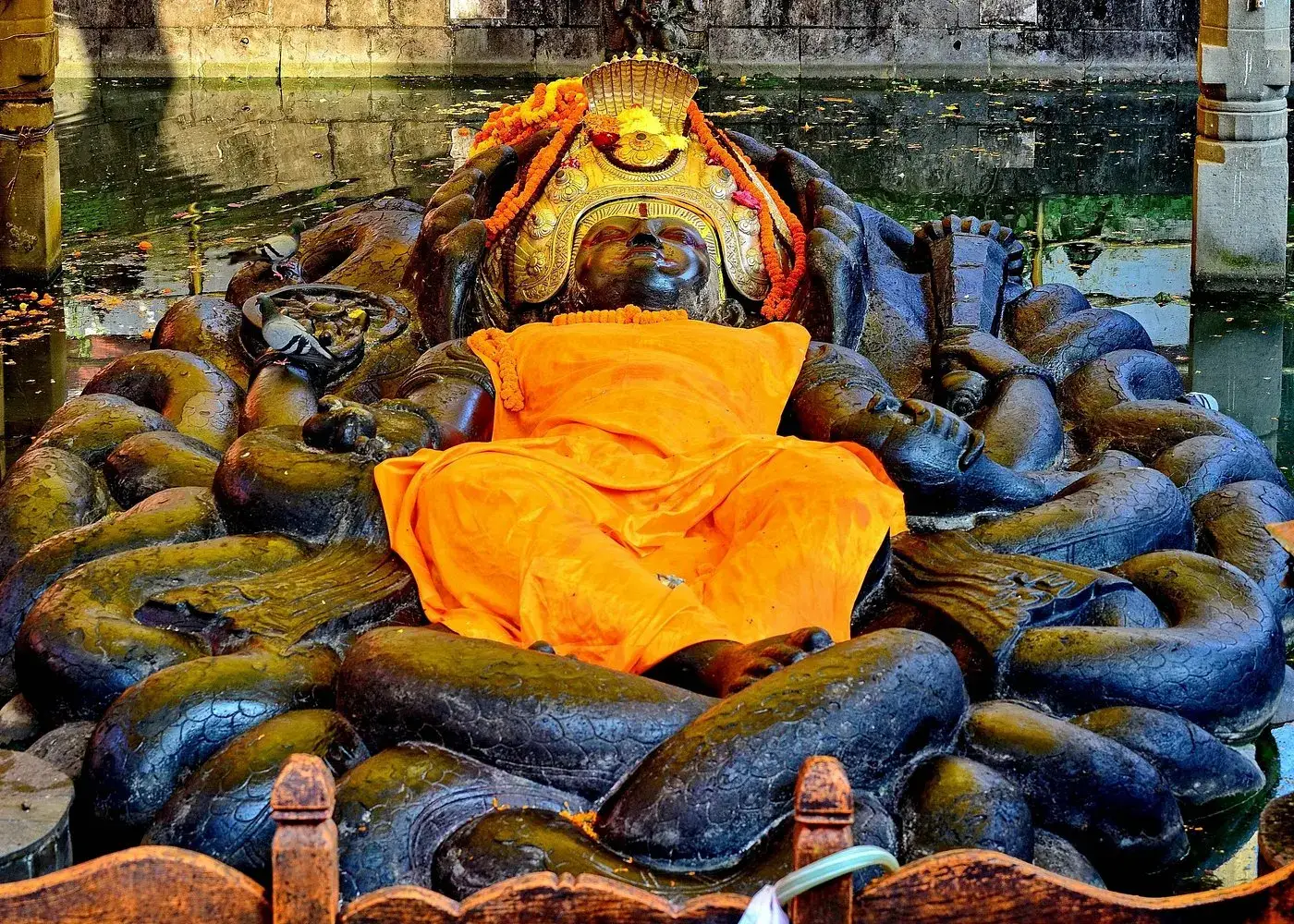
A short walk from the homestay, Budhanilkantha Temple holds one of Nepal's most remarkable sculptures: a huge image of Vishnu, about 5 m long and carved from a single black stone, reclining on the coiled serpent Shesha in a sacred pond. Believed to be well over a thousand years old, it is an active place of worship, especially busy during Ekadashi days and around Haribodhini Ekadashi in autumn, when Vishnu is said to wake from his cosmic sleep.
Boudhanath Stupa
Boudhanath is one of the largest stupas in the world and the centre of Tibetan Buddhism in Nepal. Around its vast white dome, monasteries, butter-lamp shops and rooftop cafés line the circular kora, and pilgrims walk it from dawn to dusk. Go early in the morning or at sunset, when it is busiest with worshippers and the light is soft. About 30–40 minutes by car.
Swayambhunath — the Monkey Temple
Perched on a hill west of the city, Swayambhunath blends Buddhist and Hindu shrines around an ancient stupa. Climb the long stone stairway on the eastern side (watch your bags — the monkeys are bold) for one of the best views over the Kathmandu Valley. About 30 minutes by car.
Pashupatinath Temple
On the banks of the Bagmati River, Pashupatinath is Nepal's most sacred Hindu temple, dedicated to Shiva. Non-Hindus cannot enter the main temple, but you can walk the surrounding complex of shrines and ghats, where open-air cremations take place. It is a profound place — please be respectful and ask before photographing people. About 35–45 minutes by car.
ISKCON and Hare Krishna centres
Several ISKCON (Hare Krishna) centres in the valley welcome visitors to morning and evening prayers, kirtan chanting, talks and simple vegetarian meals. No prior knowledge or belief is required.
Temple etiquette
- Walk clockwise around stupas, temples and prayer wheels.
- Dress modestly — cover shoulders and knees.
- Remove shoes where you see others doing so, and before entering shrines.
- Leather items are not allowed inside some Hindu temples.
- Ask before photographing people, rituals or cremations.